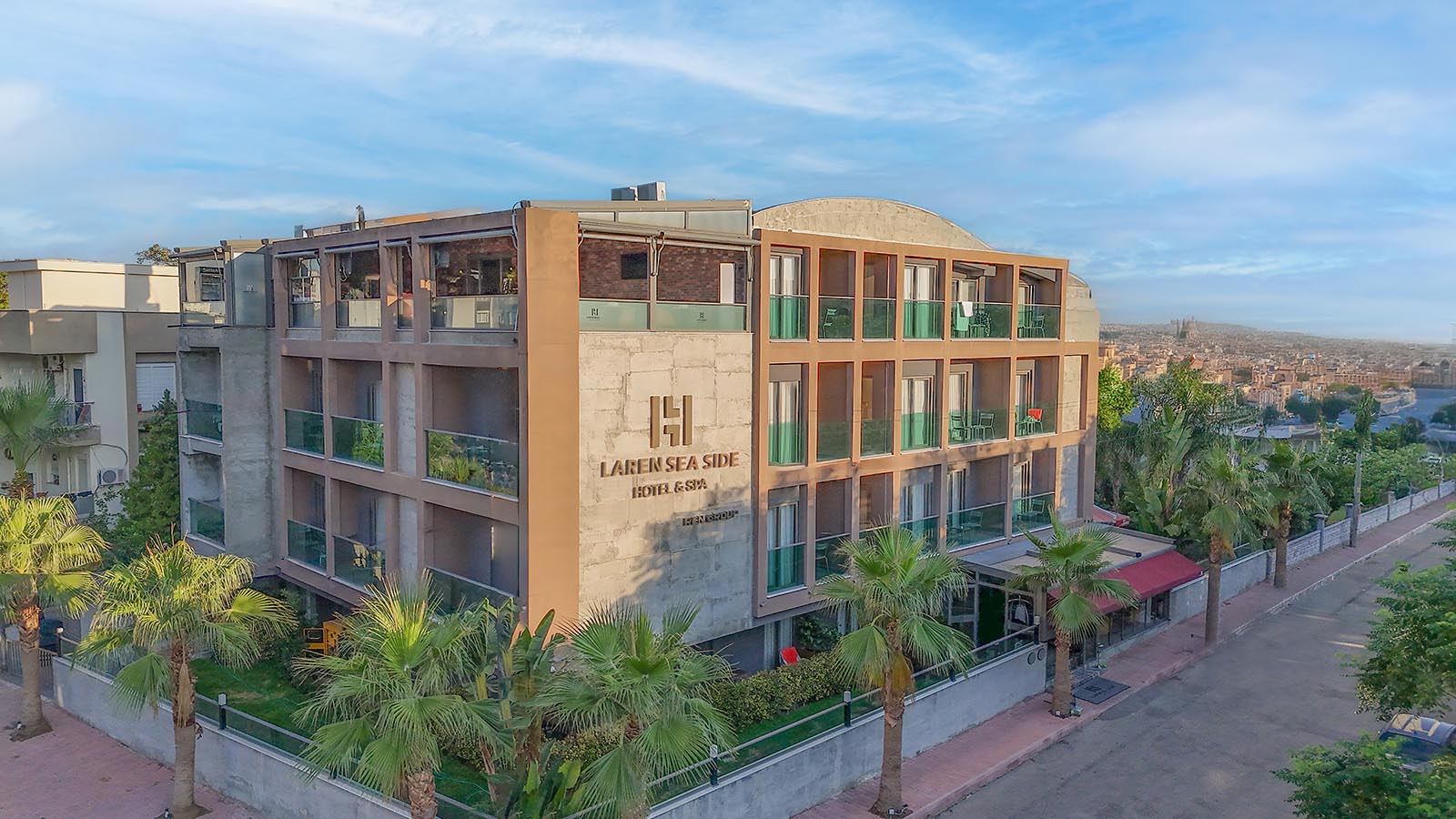
Caglayan District 2069 Street No: 11 Muratpasa/Antalya
+90 (542) 327 53 81



Our hotel, located in Antalya's Lara district in one of the best spots, aims to combine comfort and offer you a unique stay.
Lara Beach : 2 km
Düden Waterfall : 2 km
Terracity Mall : 1 km
Antalya Airport (AYT) : 7 km
Kaleiçi (Old Town) : 8 km
Antalya Bus Station : 11 km
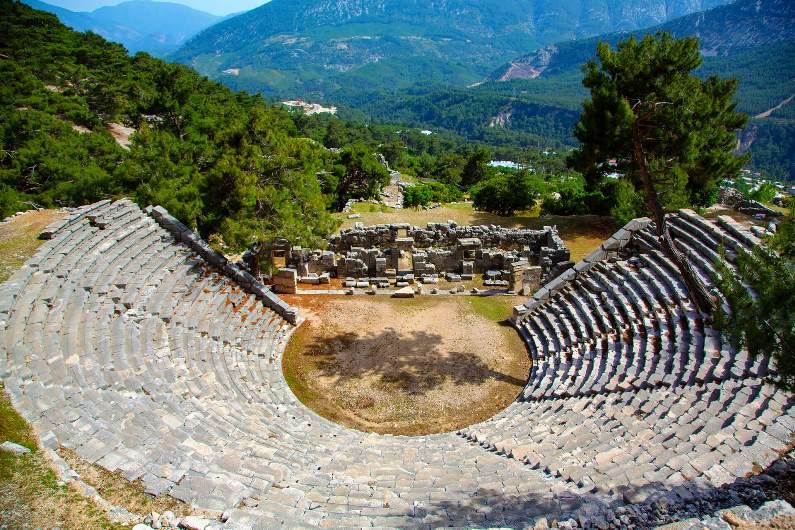
Arykanda Ancient City is located along the Finike-Elmalı road within the borders of Arif Village. It is 30 km from Finike.
The ancient city, which is currently undergoing excavation, maintenance, and cleaning works, is built on terraced levels. To tour the entirety of Arykanda Ancient City, you should allocate about 1 hour. It is definitely one of the important ancient cities in the Antalya region that must be visited.
The name Arykanda in the Lycian language is "Ary-ka-wanda," meaning "place beside the high cliff." The philological reflection of a local Anatolian language in the city's name indicates it is one of the oldest cities in the region.
The city's history is believed to date back to the 5th century BC.
Distance (Estimated Time): 150 km (2h 30m)
Formerly named Phoenicus, Finike was founded by the Phoenicians as a port city around 500 BC. Archaeological research confirms its existence since the 2nd millennium BC.
Known worldwide for its oranges, and for its nature and history, Finike is one of Antalya’s lesser-known hidden districts...
According to a study by the University of California, Finike oranges were determined to be of higher quality than the famous California oranges.
On your trip to Finike, with its orange orchards, pristine beaches and turquoise bays, you will enjoy seedless, juicy and sweet oranges aplenty.
Distance (Estimated Time): 122 km (2h 5m)
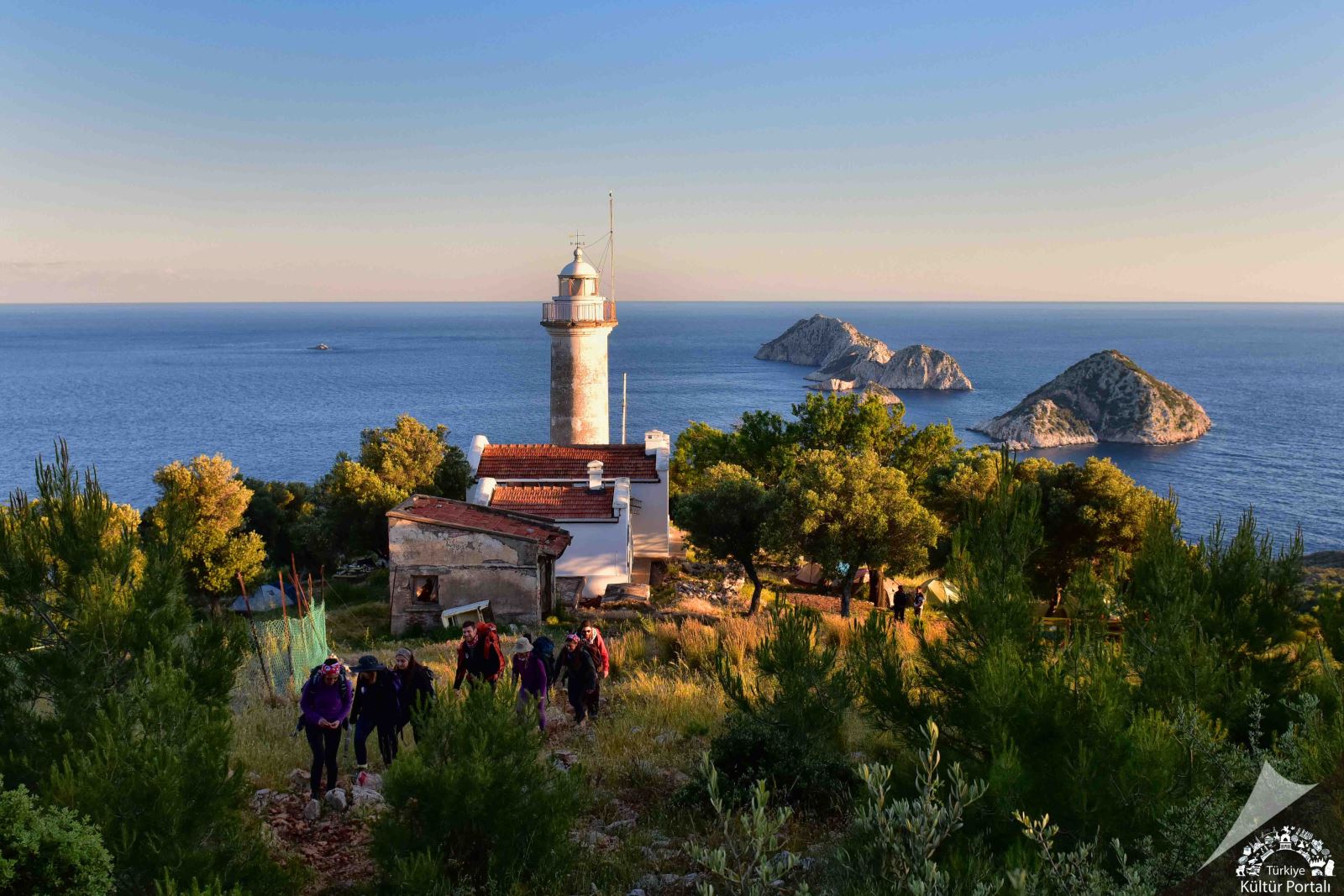
One of Turkey’s most beautiful hiking routes: Gelidonya Lighthouse. Located on the Historic Lycian Way, Gelidonya Lighthouse holds the distinction of being one of the highest lighthouses on Turkey's coast.
Set between Mediterranean pine and sage-scented forests and deep blue waters, Gelidonya Lighthouse is considered one of the region’s most impressive spots for its scenery.
Distance (Estimated Time): 115 km (2h 30m)
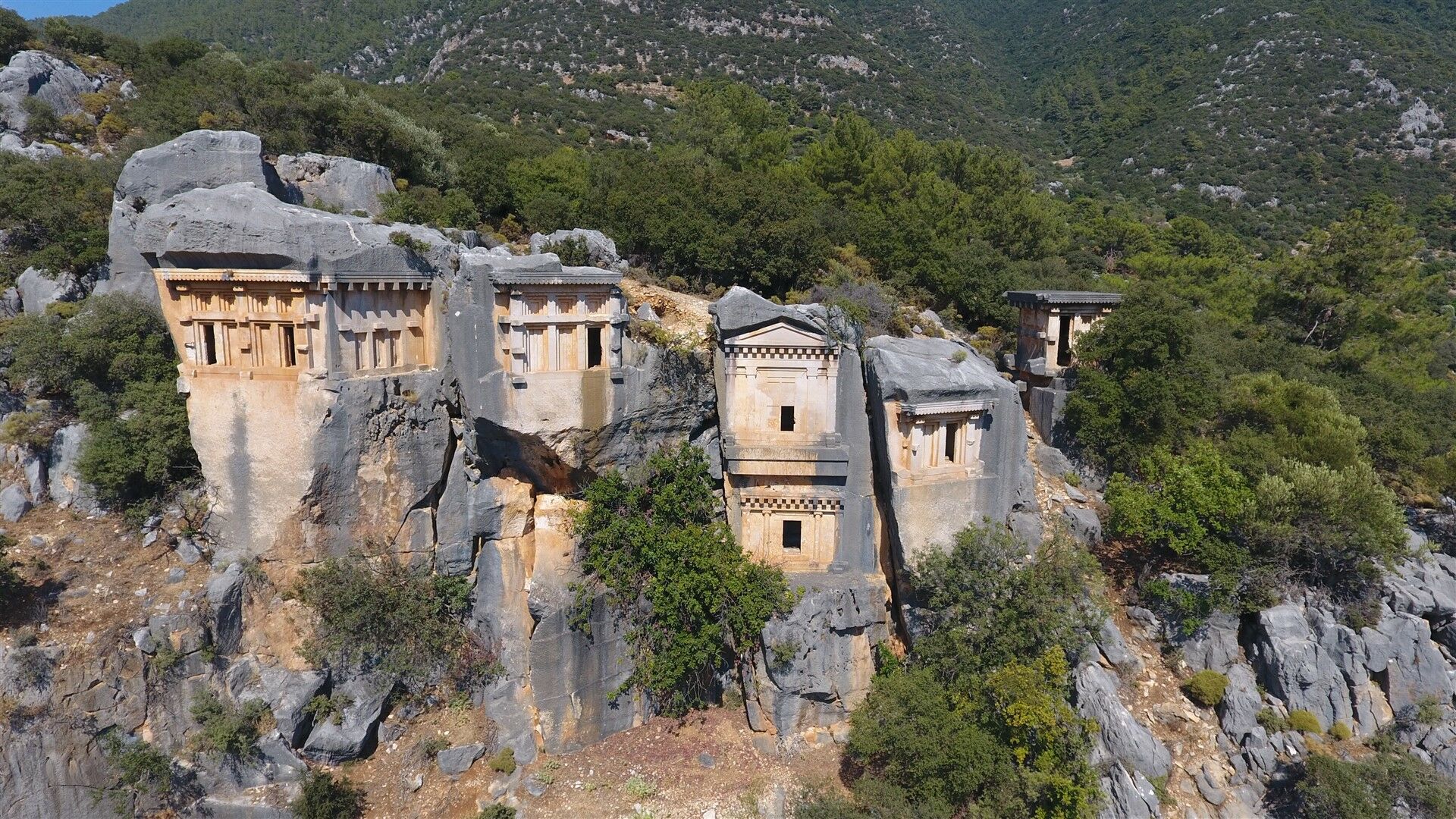
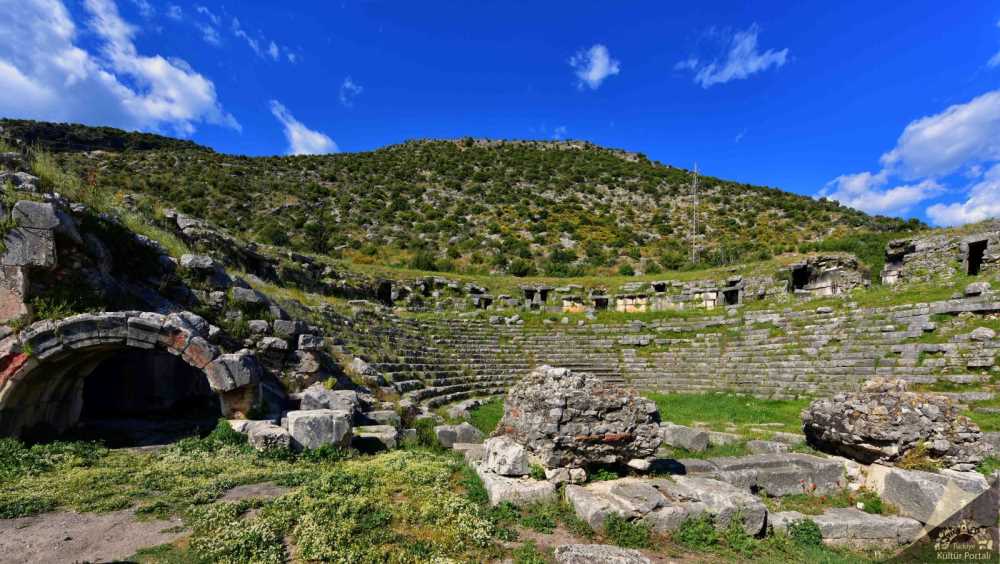
Located within the borders of the towns of Turunçova and Sahilkent, Limyra Ancient City lies on the southern slopes of Toçak Mountain. It includes an acropolis with early-period structures and the plain to its south, now separated by the highway, containing Roman and Byzantine walls. The name Limyra appears as “Zemuri” in Lycian inscriptions, indicating settlement at least since the 5th century BC. Limyra’s most active period was in the early 4th century BC under the Lycian King Perikle when it served as the capital of Lycia.
Limyra is one of the Lycian cities with the most rock-cut tombs. There are over four hundred rock tombs, many bearing Lycian inscriptions that provide names of those buried.
Distance (Estimated Time): 121 km (2h 10m)
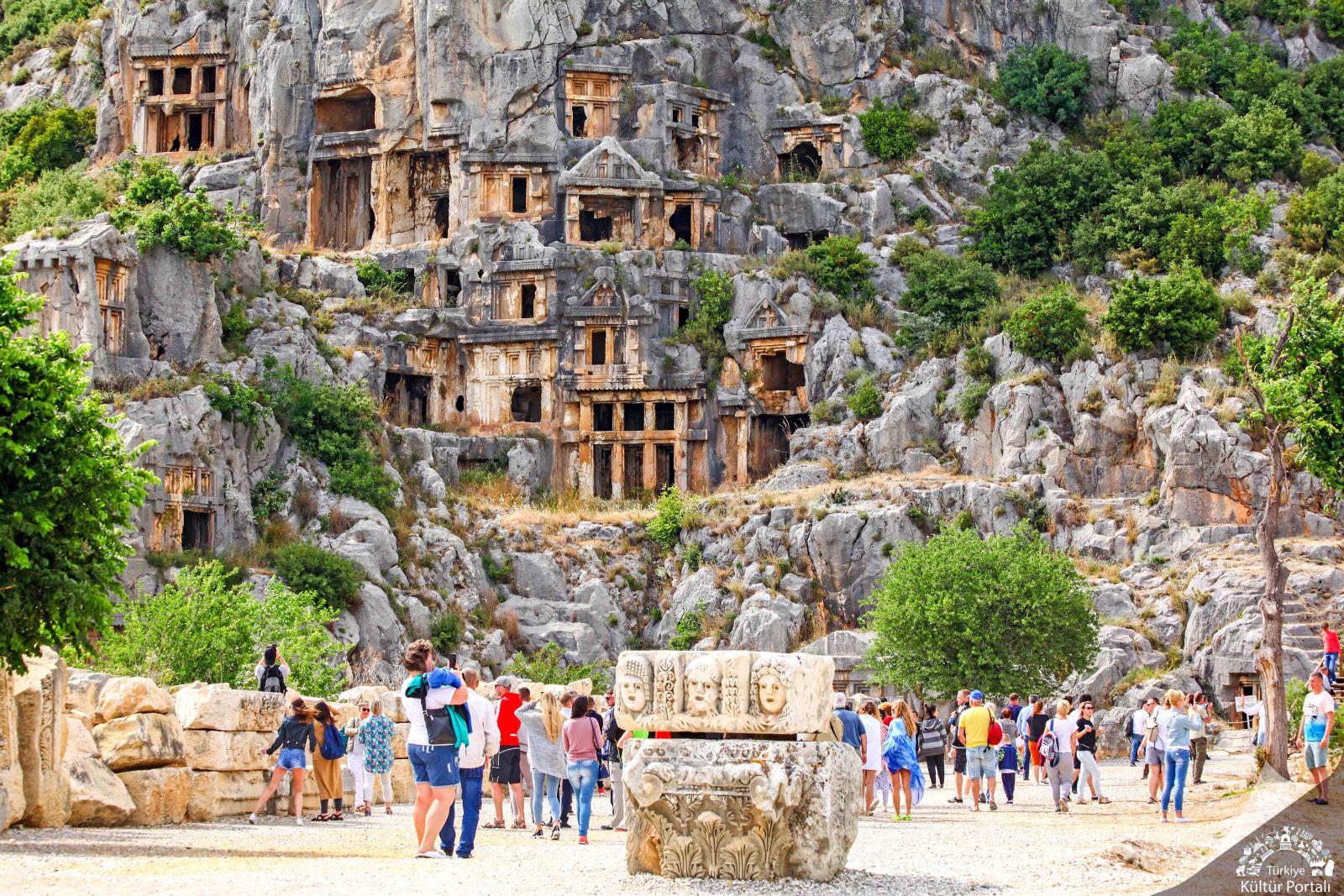
Myra, where Saint Nicholas served as bishop and which retained fame throughout the Middle Ages, is an important Lycian city whose name means "place of the Great Mother Goddess." In Lycian it appears as "Myrrh." Myra is built on the seaward slopes of mountains surrounding the Demre plain.
Originally established on the heights where the rock tombs now stand, the city later expanded downward and became one of Lycia’s six major cities. Coins minted in Myra date back to the 4th century BC and show the city’s long history.
Although ancient sources mention Myra from the 1st century BC onward, rock tombs and coins indicate the city existed at least from the 5th century BC.
Distance (Estimated Time): 154 km (2h 45m)
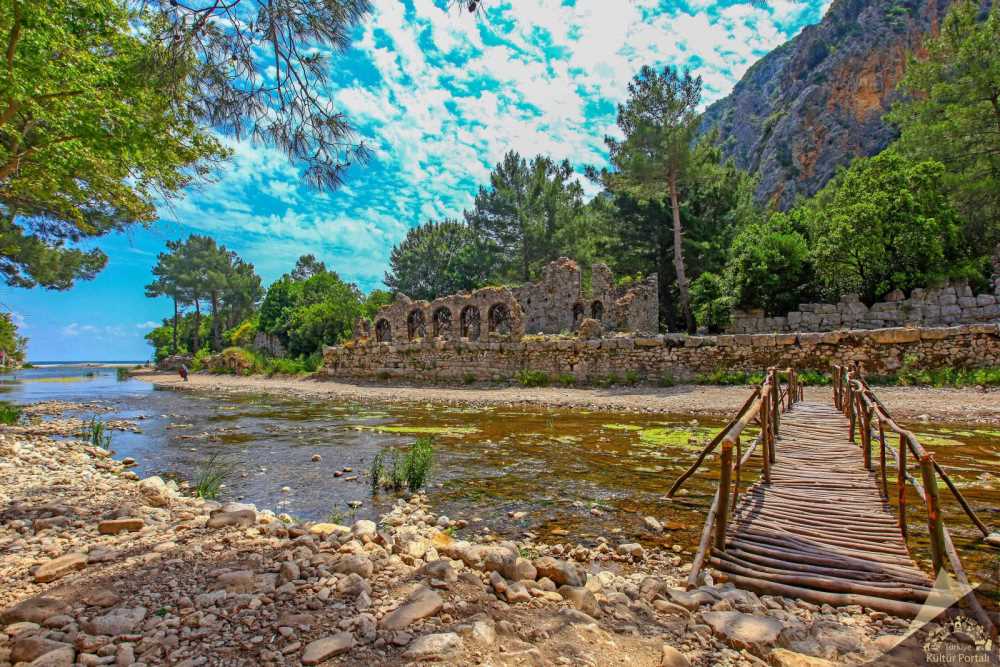
Located in Kumluca district within Olympos National Park, Olympos Ancient City is known as the City of the Gods. Nestled in a pine forest, it offers both historical atmosphere and turquoise swimming spots. Olympos was founded by the Seleucids in the 2nd century BC. Although the exact founding date is unknown, it appears on coins from 167-168 BC.
Most surviving ruins in Olympos are from the Hellenistic, Roman, and Byzantine periods. The site offers both historical ruins and beautiful beaches. The Akçay (Olympos River) flows through the city; south of the river are the South Necropolis, Alkeltis Sarcophagus, walls, theatre, and bath, while the north includes the North Necropolis, a Roman temple, monumental tombs, a mosaic building, harbor tombs, the Eudomos captain's sarcophagus, and a Genoese castle. Olympos is a must-see natural and historical wonder for visitors to Antalya.
Distance (Estimated Time): 97 km (1h 50m)
In Demre, there is a story about a poor man with three daughters who could not provide dowries; daughters without dowries were often sold into servitude. One night, three purses of gold were thrown through the window and landed by the girls’ shoes, ultimately revealing that St. Nicholas had secretly helped them. This tale is the origin of the tradition of children eagerly awaiting gifts from St. Nicholas (Santa Claus).
St. Nicholas was born in 245 AD near Patara and lived in Anatolia until his death around 326 AD. Known for his charitable acts, he became a beloved figure, protector of sailors and children, and was later venerated with a church built in his name in Demre.
Distance (Estimated Time): 155 km (2h 45m)
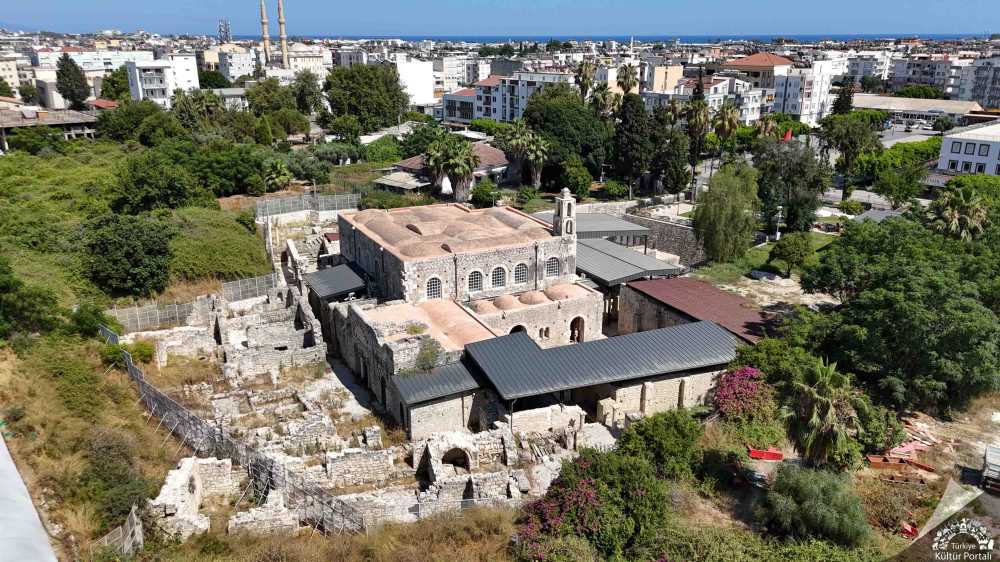
Phaselis, an ancient port city founded in the 7th century BC by Rhodian colonists led by Lakios, later fell under Persian control like many Anatolian cities. It briefly joined the Delian League and in 333 BC surrendered to Alexander the Great.
The ancient city has three harbors—north, central and south. Its wealth from these harbors made it a target for pirates. In the 2nd century AD it came under Roman rule and later joined the Lycian League.
Under Roman administration, emperors honored the city with visits, and in the Byzantine period it became a bishopric.
Distance (Estimated Time): 70 km (1h 15m)
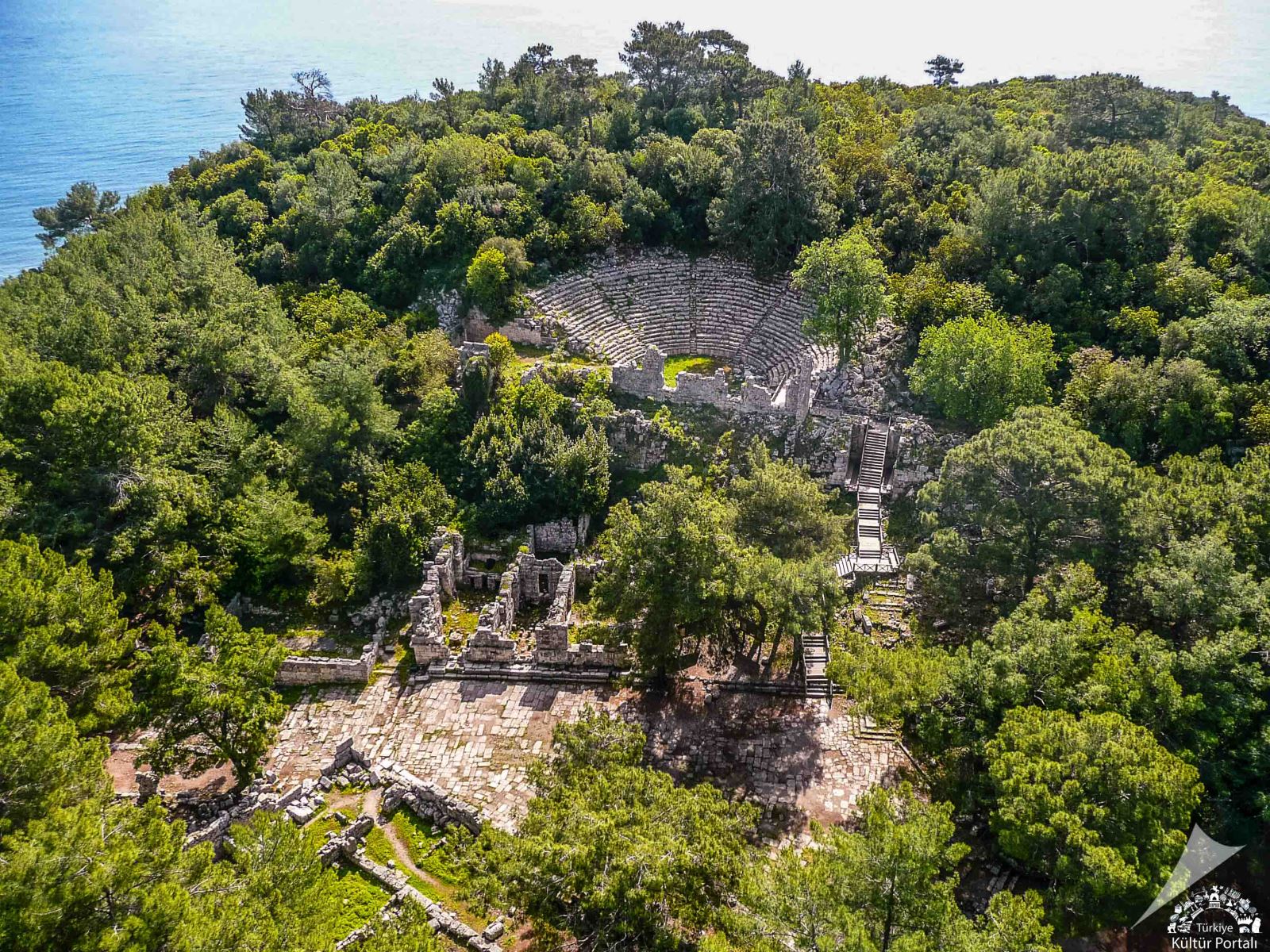
A corner of paradise, named Adrasan.
Adrasan (Çavuşköy) is a bay surrounded by impressive pine forests. Its sea, sand and woods offer striking natural beauty.
At the foot of Musa Mountain lies hidden Sazak Bay, adjacent to the sheltered Genoese Bay, forming a wonderful trio with Yalancı Bay. There is a forest road extending to Adrasan. Most access is by boat. While swimming, you may encounter sea turtles and various fish—bring snorkeling gear if available.
Distance (Estimated Time): 107 km (1h 50m)
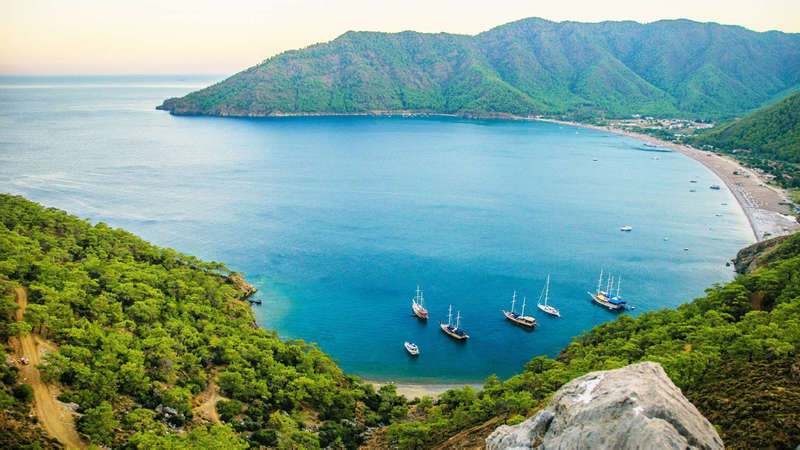
Known as "Turkey’s Maldives," Suluada is a Mediterranean island near Adrasan. It lies about 7 kilometers from Gelidonya Cape at the western edge of the Antalya Gulf. Famous for its stunning turquoise waters and biodiversity, the island is accessible only by sea and is renowned for its clear water and white sands, historically thought to have healing properties.
Distance (Estimated Time): 120 km (2h 20m)
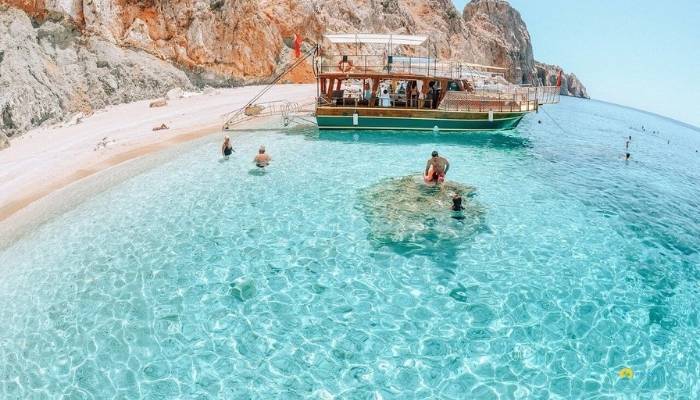
Akseki Bay, near Adrasan, is the largest bay by area. From the sea, the right side of the bay appears low while the left is surrounded by high cliffs. The bay is named after its white, knife-like steep rock cliffs. It has a wonderful beach with fine sand and is surrounded by red pine trees.
The bay lies between Olympos and Adrasan along the Mediterranean coast and is one of the closest bays to Adrasan. Access is typically by boat from Adrasan.
Distance (Estimated Time): 108 km (2h)
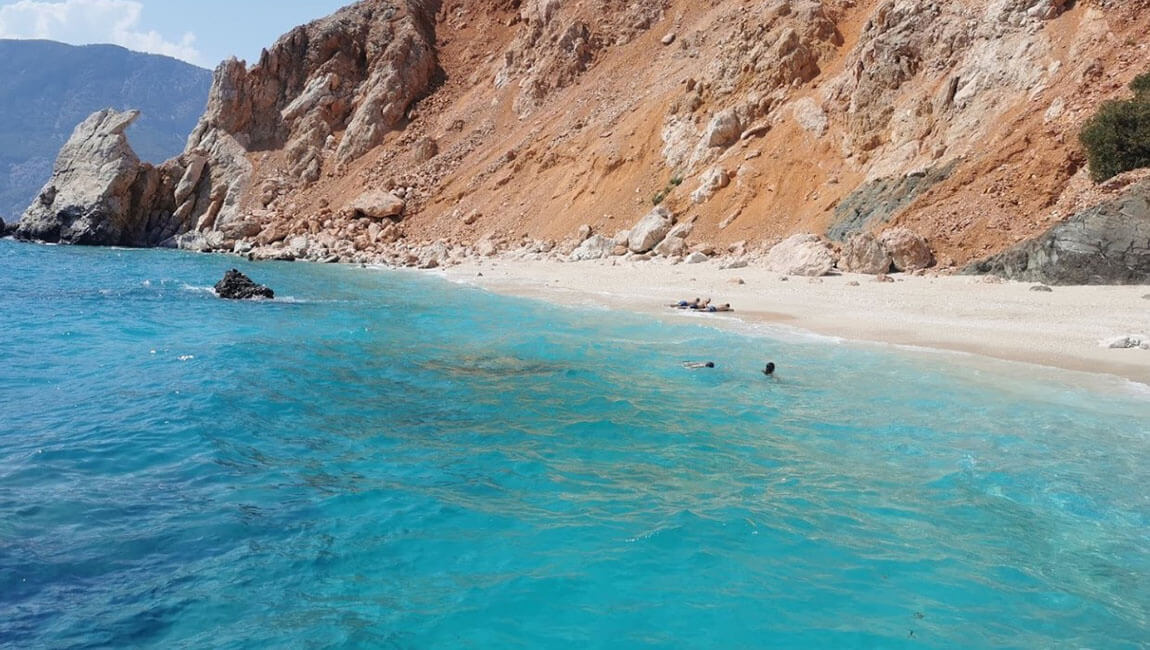
Genoese Bay is one of the well-preserved bays along the Mediterranean coast. Known for its cleanliness and clear waters, it lies between Adrasan and Olympos. There is no road access; boats from Adrasan provide transportation. Legend says the Mediterranean once sheltered pirates here.
With almost no artificial light nearby, the bay offers magnificent stargazing at night. A boat tour to Genoese Bay is a must to witness these beauties in person.
Distance (Estimated Time): 97 km (1h 50m)
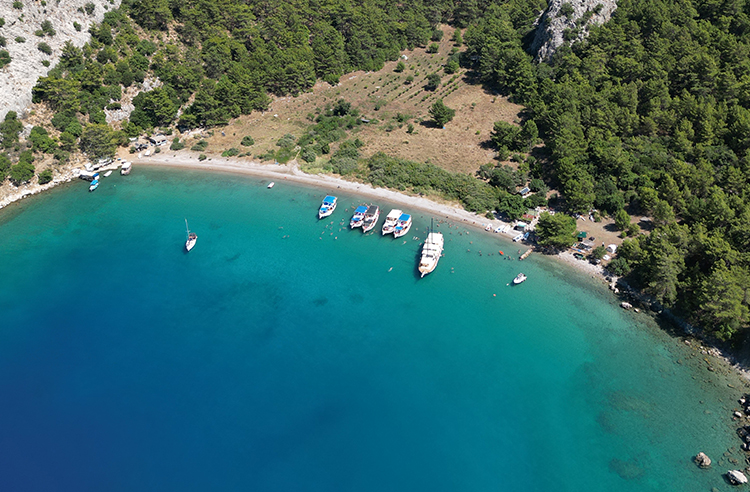
Untouched and hidden among pine trees, this bay named "Pirate" lies between Adrasan and Olympos and is near Gelidonya Lighthouse. It is one of Antalya’s hidden paradises, famed for its nature and sea color.
Distance (Estimated Time): 116 km (2h 10m)
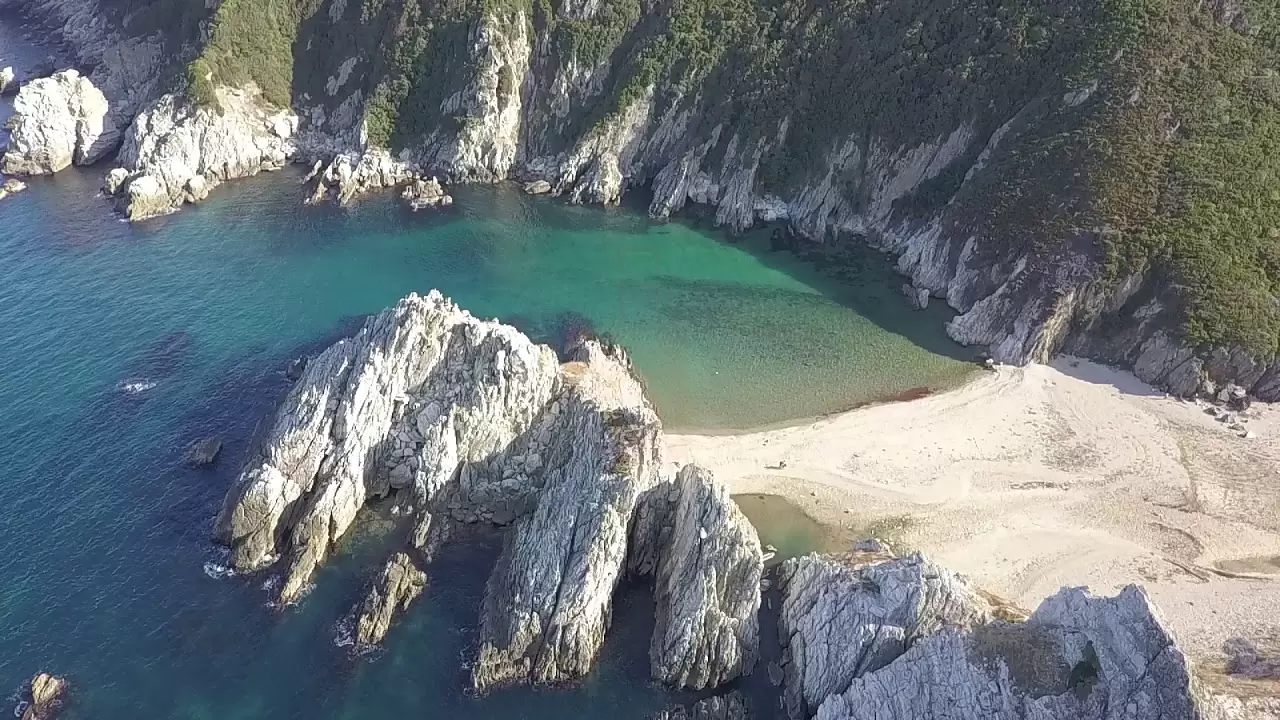
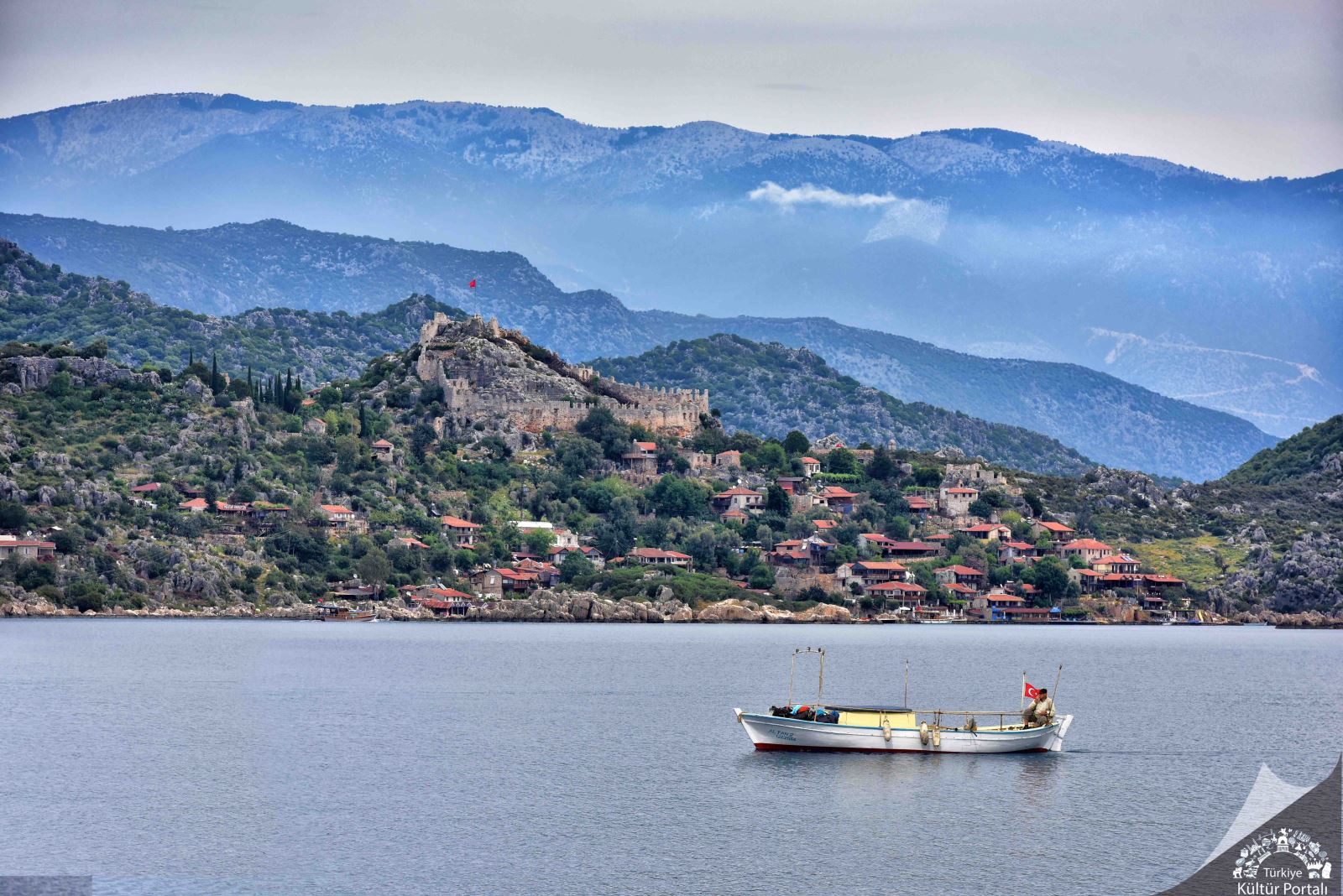
Kale Village is built on the ancient city of Simena. Inscriptions indicate the city's history extends back to the 4th century BC. The Simena castle was used during the Middle Ages.
Within the medieval walls of the inner citadel there are remains of a temple and a stoa, and a small theater carved into the rock with seven seating rows for about 300 people—the smallest theater among Lycian cities.
Above the rock tomb there are Roman-era masonry walls and later medieval battlements with embrasures.
Distance (Estimated Time): 209 km (3h 40m)